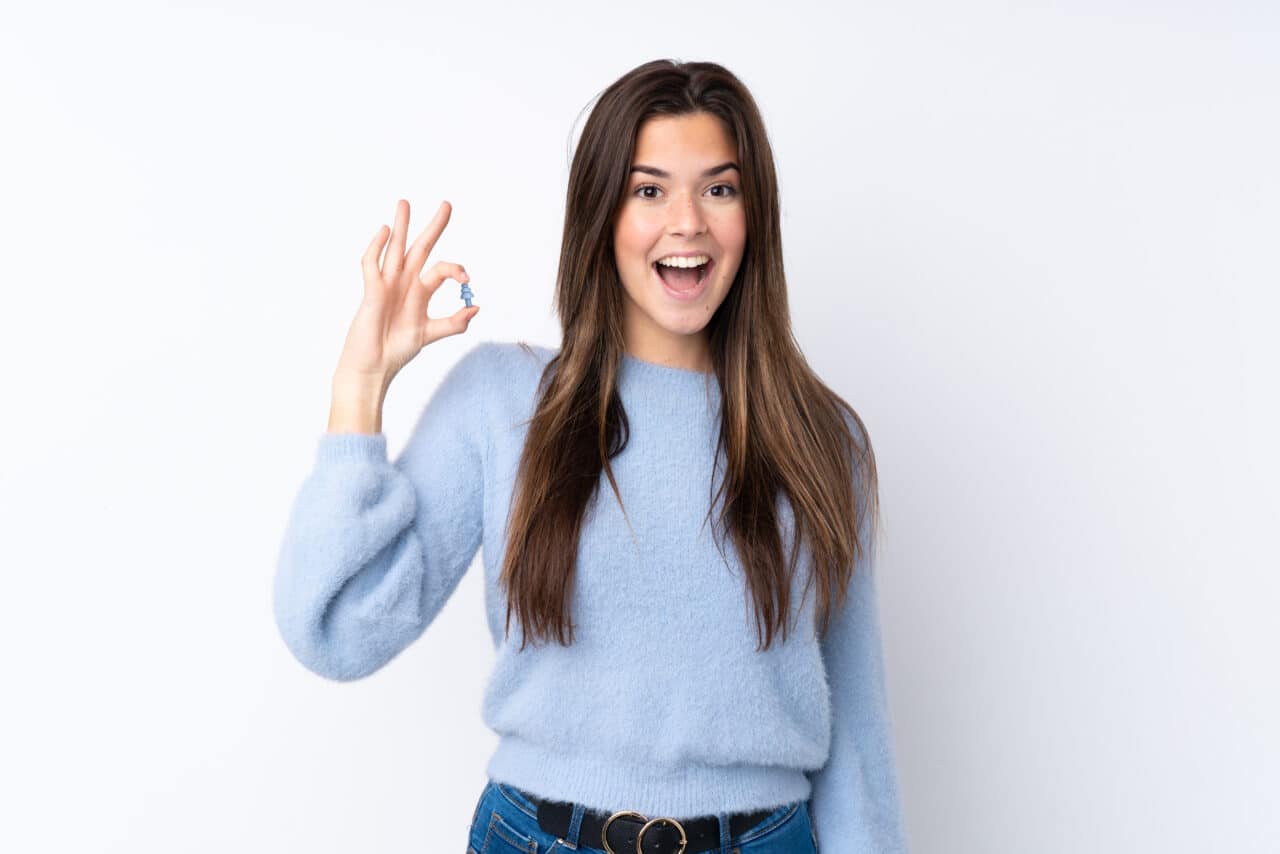
Hearing loss at concerts happens when sound levels exceed what your ears can safely handle, typically anything above 85 decibels sustained over time. Most live music venues push well past that, often hitting 110 dB or more, which can start damaging the delicate hair cells in your inner ear within minutes. Those hair cells do not grow back, which means the damage is permanent. The good news is that protecting your hearing at concerts is straightforward, and you do not have to sacrifice the experience to do it.
What actually causes hearing loss at concerts?
Your inner ear contains thousands of tiny hair cells that convert sound vibrations into electrical signals your brain interprets as music, voices, and everything else you hear. When sound is too loud, these cells get overstimulated and physically damaged. Think of it like bending a blade of grass back and forth repeatedly until it snaps. Once those hair cells are gone, your hearing does not recover.
The technical term for this is noise-induced hearing loss (NIHL). It develops gradually and often silently, which is what makes it so easy to ignore. You may not notice the damage until years later, when you realize you are struggling to follow conversations in noisy rooms or asking people to repeat themselves far more than you used to.
How loud is a typical concert, and why does that matter?
A typical live music venue in the US regularly hits sound levels between 100 and 115 dB, and some shows push even higher. To put that in perspective, a normal conversation sits around 60 dB, and a lawnmower runs at roughly 90 dB. The decibel scale is logarithmic, meaning each 10 dB increase represents a sound roughly ten times more intense to your ears.
The loudest verified concert measurement on record belongs to a Swedish rock band called Sleazy Joe, clocked at 143.2 dB in 2008. That is roughly equivalent to standing 25 meters from a jet fighter at full takeoff thrust. The Guinness Book of World Records eventually stopped accepting loudest band submissions because the attempts posed too serious a risk of permanent hearing damage to everyone present.
There is no federal noise regulation in the US that limits sound levels at concerts or clubs. That means venue operators are not legally required to keep the volume at a safe level, and audience members are routinely exposed to sound intensities that would trigger mandatory hearing protection requirements in any industrial workplace.
How long does it take for concert noise to damage your hearing?
At 100 dB, hearing damage can begin after just 15 minutes of unprotected exposure. At 110 dB, that window shrinks to under two minutes. Most concerts run for two hours or more, which means the cumulative sound dose your ears absorb during a single show can be substantial.
The relationship between volume and time is important here. It is not just about how loud the music is, but how long your ears are exposed to it and how often. Someone who attends one loud show a year is in a very different position than someone who goes to festivals every weekend through the summer. NIHL builds up gradually, and the damage from each exposure adds to what came before.
What are the early warning signs of concert-related hearing damage?
The most common early sign is ringing ears after a festival or concert, a condition called tinnitus. That high-pitched tone or hiss you notice on the way home or when you lie down in a quiet room is your auditory system signaling that it has been pushed too hard. For most people after a single exposure, it fades within hours or a day or two. But repeated exposures make it more likely to become permanent.
Other early warning signs include:
- Muffled or dulled hearing after leaving a venue, as if your ears are stuffed with cotton
- Difficulty understanding speech in the hours following a show, especially in noisy environments
- A feeling of fullness or pressure in one or both ears
- Sounds seeming distorted rather than simply quieter
These symptoms are signs of a temporary threshold shift, meaning your hearing has temporarily shifted down in sensitivity. Recurring temporary shifts that are not given time to recover can gradually become permanent. If ringing ears after a festival becomes a regular pattern for you, that is worth taking seriously.
Can you enjoy live music and still protect your hearing?
Absolutely, and this is where a lot of people have the wrong idea. The assumption that earplugs ruin the concert experience comes from experience with the wrong type of earplugs. Foam earplugs muffle sound unevenly, cutting high frequencies more than low ones and leaving music sounding muddy and flat. That is a fair trade-off at a construction site, but not at a show you paid good money to attend.
High-fidelity earplugs work differently. They reduce the overall volume without distorting the frequency balance, so the music still sounds like music, just at a safer level. Many regular festival-goers and even professional musicians use them routinely. Stepping away to a quiet zone for a break between sets also helps your ears recover and reduces the total sound dose over the course of the evening.
What should you look for in earplugs for concerts?
When shopping for earplugs for concerts or festival ear protection, the most important thing to look for is a flat attenuation profile. This means the earplug reduces all frequencies roughly equally, preserving the tonal balance of the music rather than making everything sound like it is coming from the next room.
A few other things worth considering:
- SNR rating: This stands for Single Number Rating and tells you how many decibels of protection the earplug provides. For concerts regularly hitting 110 dB, an SNR of around 20 to 25 dB brings you into a safe range.
- Fit and comfort: An earplug that does not sit properly in your ear does not protect you properly. Look for options with multiple size layers or tips to suit different ear canal sizes.
- Material: Soft, hypoallergenic materials are more comfortable for extended wear and less likely to irritate sensitive ears.
- Reusability: Single-use foam plugs are wasteful and inconsistent. Reusable earplugs designed for music use give you reliable, repeatable protection and better value over time.
- Filter design: The filter is what shapes how sound passes through. A well-designed filter preserves clarity; a poorly designed one just blocks everything indiscriminately.
Is concert hearing loss permanent or can it be reversed?
Once the hair cells in your inner ear are damaged, they do not regenerate. There is currently no medical treatment, medication, or surgery that restores hearing lost through noise exposure. Hearing aids can help compensate for the loss, but they do not repair the underlying damage. Prevention is the only real strategy.
That said, not every post-concert experience of dulled hearing or ringing ears is permanent. Temporary threshold shift, the short-term reduction in hearing sensitivity after loud noise exposure, can resolve on its own if the ears are given adequate rest. The problem is that each unprotected exposure adds cumulative wear, and over time the temporary becomes permanent without any single obvious turning point. By the time most people notice they have hearing loss, it has already been developing for years.
The simplest and most effective thing you can do is wear hearing protection every time you attend a loud event. Not just at the biggest festivals, but at club nights, local gigs, and anywhere else the volume is genuinely high. That is where Shush Acoustic earplugs come in. We built them specifically for music lovers who want real protection without giving up sound quality. The ceramic Venturi filter at the core of every pair reduces volume by 23 dB while keeping the full frequency range intact, so the music you hear is still the music the artist intended, just at a level your ears can handle. Made from soft hypoallergenic synthetic rubber, they are comfortable enough to wear through an entire festival set, and durable enough to last at least a year of regular use. Because the filter sits inside the earplug rather than at the tip, you are protected even if the plug only partially enters your ear canal, which makes them genuinely reliable festival ear protection in a way that a lot of alternatives simply are not.
Frequently Asked Questions
How do I know if the earplugs I already own will actually protect me at a concert?
Check the packaging for an NRR (Noise Reduction Rating) or SNR rating and look for any mention of a flat attenuation profile. Standard foam earplugs typically have high NRR ratings but cut high frequencies heavily, leaving music sounding muffled and unbalanced. If your earplugs are not specifically marketed for music or concert use and do not mention flat or uniform frequency reduction, they are likely designed for blocking out noise rather than preserving sound quality, which means they will protect your hearing but significantly degrade the listening experience.
What is the best spot to stand at a concert if I want to protect my hearing without earplugs?
Moving further from the main speakers and avoiding positions directly in front of speaker stacks can meaningfully reduce your sound exposure, since volume drops with distance. Side positions and spots near the back of the venue are generally quieter than the area directly in front of the stage. That said, even at the back of many venues, sound levels can still exceed 90 to 100 dB, so positioning alone is rarely enough to bring you into a truly safe range. Combining a smarter spot with high-fidelity earplugs gives you the best of both protection and experience.
Can I use a smartphone app to check how loud a concert actually is?
Yes, and it is a genuinely useful habit to develop. Apps like NIOSH SLM (developed by the National Institute for Occupational Safety and Health) and Decibel X give reasonably accurate sound level readings using your phone's built-in microphone. While they are not calibrated professional instruments, they are accurate enough to tell you whether you are in the 100 to 115 dB range typical of live venues. If your reading is consistently above 85 dB, that is your cue to put your earplugs in, regardless of how the music sounds subjectively.
How soon after a loud concert should I see a doctor if the ringing in my ears does not go away?
If tinnitus or muffled hearing persists beyond 48 to 72 hours after a concert, it is worth contacting an audiologist or your primary care physician. Persistent symptoms beyond that window may indicate that the temporary threshold shift is not fully resolving, which is an early sign of lasting damage. Early intervention, including a proper hearing evaluation, can help establish a baseline and catch any progressive loss before it becomes more significant. Do not wait weeks or months to seek evaluation, since the sooner you understand what is happening with your hearing, the more options you have.
Are custom-molded earplugs worth the cost compared to off-the-shelf options?
Custom-molded earplugs, made from an impression of your specific ear canal, offer an excellent fit and consistent attenuation, but they typically cost between $150 and $300 or more through an audiologist. For professional musicians or audio engineers who are in loud environments multiple nights a week, that investment makes a lot of sense. For most regular concert-goers and festival attendees, a well-designed reusable earplug with multiple tip sizes and a quality acoustic filter delivers very reliable protection at a fraction of the cost, making it a practical and effective starting point.
Does hearing loss from concerts affect all frequencies equally, or are some sounds affected more than others?
Noise-induced hearing loss typically hits high frequencies first, particularly in the 3,000 to 6,000 Hz range, which is exactly where consonant sounds in speech, such as 's,' 'f,' and 'th,' live. This is why one of the earliest real-world signs of hearing damage is difficulty understanding speech in noisy environments even when you can still hear that someone is talking. Music clarity and the ability to distinguish instruments in complex mixes also suffer early. Low frequencies tend to be more resilient, which is why people with noise-induced hearing loss can often still hear bass and drums clearly while struggling with vocals and higher-pitched instruments.
Is it safe to bring kids or teenagers to concerts, and should they wear hearing protection too?
Children and teenagers are at least as vulnerable to noise-induced hearing loss as adults, and some research suggests younger ears may be more susceptible. If a venue is loud enough to require hearing protection for an adult, it is loud enough to require it for a child. Look for earplugs specifically sized for children's ear canals, since adult earplugs will not fit or seal properly and will not provide reliable protection. Many parents find that framing earplugs as part of the concert experience, rather than a restriction, helps kids accept and even embrace wearing them.
Related Articles
- Can a single loud concert damage your hearing permanently?
- Can earplugs for nightclubs help people with sensory sensitivities enjoy going out?
- Can one night of clubbing cause permanent hearing damage?
- Can earplugs for music sound change how instruments sound to your ear?
- Do earplugs for live music change how a band actually sounds?
- How do you prevent hearing damage at concerts without muffling the sound?
- What is the difference between earplugs for live music and standard foam plugs?
- Can wearing earplugs at a loud bar reduce next-day fatigue and headaches?
- Do earplugs for EDM events block the bass frequencies you came to feel?
- What type of ear protection works best in a nightclub?
- Can concert earplugs help with sensory overload at live events?
- Do earplugs affect your ability to communicate with people at loud events?
- Do earplugs for clubbing muffle the music too much?
- Can concert earplugs help people with anxiety in loud crowd environments?
- How do high-fidelity earplugs differ from regular foam ones?