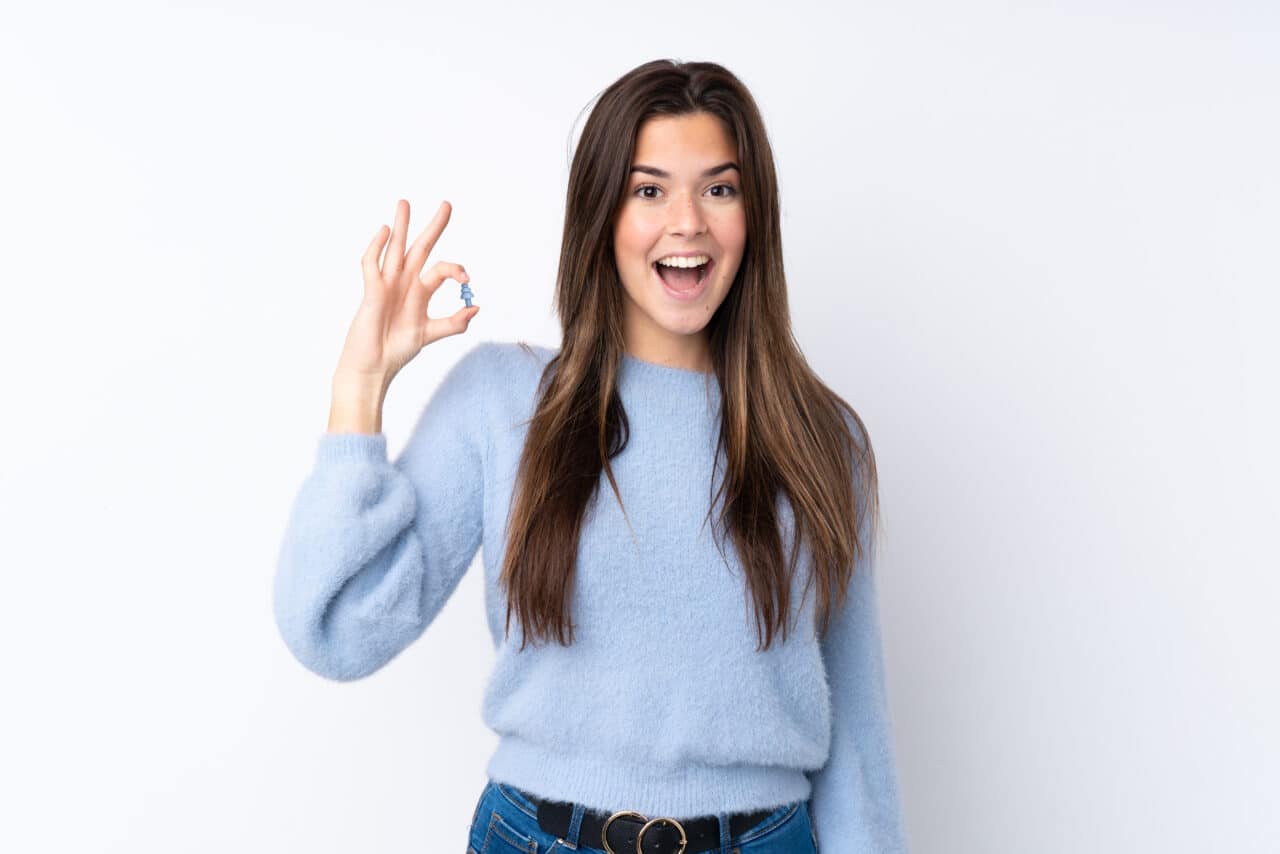
Yes, wearing ear protection at clubs genuinely improves your experience on the dance floor. Club music regularly hits 110 dB or higher, which can cause real hearing damage after just a few minutes of exposure. High-fidelity earplugs reduce that volume to a safe level without making music sound muffled or distant. You hear the bass, the melody, and every detail of the mix, just at a volume that does not leave your ears ringing for days.
Is loud club music actually bad for your hearing?
Short answer: yes, and faster than most people realize. Sound levels at nightclubs and venues in the US regularly exceed 110 dB, and some peak even higher near the speakers. At that level, the World Health Organization recommends no more than a few minutes of unprotected exposure before hearing damage begins to occur. The US has no federal noise regulation for entertainment venues, which means club-goers are routinely exposed to dangerously high sound levels with no legal limit in place.
The damage is cumulative and largely irreversible. The delicate hair cells in your inner ear do not regenerate once they are gone. What makes it especially tricky is that the early signs are easy to dismiss. That ringing in your ears after a night out, the kind that fades by morning, is not just an annoyance. It is a signal that your inner ear took a hit. Research from the WHO notes that even when short-term symptoms fully resolve, progressive injury to the inner ear can continue for months. Over time, repeated exposure leads to permanent hearing loss or tinnitus, and no medication or surgery can reverse it.
Nearly one in four US adults between the ages of 20 and 69 already show evidence of noise-induced hearing loss, according to CDC data. For regular club-goers, that risk compounds with every unprotected night out.
What are high-fidelity earplugs and how do they work?
Standard foam earplugs work by blocking as much sound as possible across all frequencies. They do the job on a construction site, but at a club they make music sound like someone turned a pillow over your head. High-fidelity earplugs take a completely different approach. Instead of blocking sound indiscriminately, they use a precision filter to reduce volume evenly across the frequency range, so the music you hear sounds like the music the DJ intended, just quieter.
The filter is the heart of the design. Most high-fidelity earplugs use a plastic or silicone filter at the end of the stem. Better options use a ceramic filter, which conducts sound more cleanly than plastic and prevents the distortion that causes that hollow, underwater effect. The shape of the filter matters too. A venturi design, narrow in the middle and wider at both ends, allows sound waves to pass through smoothly without breaking up, which preserves clarity at reduced volume.
A good high-fidelity earplug can reduce sound by around 23 dB while keeping the listening experience clean and balanced. That takes a dangerously loud club environment down to a level your ears can handle for hours without damage.
Do earplugs muffle music at clubs?
Foam earplugs do. High-fidelity earplugs do not, and that distinction is worth understanding before you write off ear protection entirely.
The muffled effect happens when an earplug blocks high frequencies more than low ones, which is exactly what foam does. The bass comes through, the mids and highs get cut, and everything sounds unbalanced and dull. High-fidelity earplugs are specifically engineered to avoid this. By reducing all frequencies at a similar rate, they preserve the tonal balance of the music. The mix stays intact. You can still hear the hi-hats, the synth layers, the vocals, and the sub-bass working together the way they should.
The difference is truly noticeable compared to standard earplugs you might grab at a pharmacy. With a quality high-fidelity earplug, most people find it takes only a few minutes to adjust, and then the music simply sounds like music at a more comfortable volume. Many regular club-goers say they actually enjoy the sound more with earplugs in, because they are not fighting fatigue from overstimulation.
Can earplugs actually make clubbing more enjoyable?
This is the part that surprises most people who have never tried it. Yes, earplugs can genuinely make a night out more enjoyable, not just safer.
Here is why. When sound levels are extremely high, your brain works harder to process everything coming in. That cognitive load builds up over the course of a night and contributes to the worn-out, foggy feeling you sometimes have after a long night out, even if you did not drink much. Reducing the volume to a manageable level lets you stay in the music without being overwhelmed by it.
Conversations also become easier. Counterintuitively, well-designed earplugs can make it simpler to talk to the person next to you, because they reduce the overall noise floor without completely cutting off speech frequencies. You are not shouting as much, which means you are less tired by the end of the night.
And then there is the morning after. Skipping the post-club ear ringing and that dull, muffled sound that lingers into the next day is a genuine quality-of-life improvement. You wake up feeling normal instead of recovering.
How do you choose the right earplugs for a club night?
Look for a few specific things when choosing earplugs for clubbing.
- High-fidelity filter: Make sure the earplugs are designed for music, not industrial noise. The packaging should mention flat attenuation or music-specific filtering. Avoid foam earplugs entirely for this use case.
- Attenuation level: For a club environment at 110 dB or above, you want at least 20 dB of reduction. An SNR of 23 dB is a solid benchmark that brings the volume into a safe range without cutting it so low that you lose the experience.
- Material and fit: Soft synthetic rubber fits more comfortably than hard plastic and creates a better seal. A multi-layer mushroom fit adapts to different ear canal sizes and stays secure while you move. Silicone earplugs are common but tend to slip more easily and block less noise than denser materials.
- Reusability: A good pair of earplugs should last at least a year of regular use. Single-use foam plugs are wasteful and inconsistent in fit. Investing in a quality reusable pair works out to a much lower cost per use over time.
- Certifications: Look for earplugs that have been independently tested and certified to recognized standards such as EN 352-2:2020 in Europe or ANSI S3.19-1974 in the US. This tells you the attenuation rating is real, not just a marketing claim.
How do you wear earplugs so they stay in while dancing?
Getting the fit right makes a bigger difference than most people expect. A poorly fitted earplug not only falls out, it also does not seal properly, which reduces the protection you actually get.
For mushroom-style or triple-flange earplugs, insert them gently and twist slightly as you push them in. The outermost layer should sit at the entrance of your ear canal, not jammed in deep. A light tug on your earlobe while inserting helps open the canal and lets the earplug seat properly.
If your earplugs keep slipping out while dancing, check two things. First, make sure you are using the right size. Many high-fidelity earplugs come with different-sized tips or multiple layers designed to accommodate different ear canal sizes. Second, look at the material. Denser, softer rubber grips the ear canal better than smooth silicone, which can slide out with sweat and movement.
Once seated correctly, a good pair of earplugs should stay put through a full night of dancing without needing constant adjustment.
When should you start wearing earplugs at clubs?
Now, if you have not already started. There is no threshold of hearing loss you need to reach before ear protection becomes relevant. The damage is cumulative, which means every unprotected night out adds to a running total that your ears cannot reverse.
Survey data from the CDC shows that roughly three in five US adults say they would wear hearing protection if it were provided at a venue where sound could exceed safe levels. The intent is there. The gap is usually habit and access. Most people who start wearing earplugs at clubs say they wish they had started years earlier, not because they noticed dramatic damage, but because the difference in how they feel the next morning is immediate and obvious.
If you attend clubs or live music events even a handful of times a year, the case for earplugs is straightforward. The hearing you protect now is the hearing you keep for the next 40 years.
That is exactly why we built the Shush Acoustic earplugs. They use a ceramic venturi filter, the only one of its kind, positioned inside the earplug rather than at the tip of the stem. That internal placement means you are protected even if your ear canal only fits the first layer, and the ceramic material conducts sound more cleanly than any plastic alternative on the market. The result is 23 dB of real, certified attenuation with sound that stays clear, balanced, and genuinely enjoyable. Made from hypoallergenic synthetic rubber that outlasts foam and silicone by a significant margin, they are built to last at least 365 uses. One pair, one investment, and a whole lot of mornings where your ears feel exactly as they should.
Frequently Asked Questions
How long does it take to get used to wearing earplugs at a club?
Most people adjust within the first 10 to 15 minutes of putting them in. The initial sensation of having something in your ear canal fades quickly, and your brain recalibrates to the new volume level fast. If discomfort persists beyond that, it is usually a fit issue rather than a comfort issue, so try adjusting the insertion depth or switching to a different tip size.
Can I wear earplugs if I have small or unusually shaped ear canals?
Yes, and you have more options than you might think. Many high-fidelity earplugs come with multiple tip sizes or multi-layer mushroom designs that adapt to a range of ear canal shapes and sizes. If standard tips do not work for you, look for brands that offer small or XS sizing, or consider custom-molded earplugs made from an impression of your ear canal for a guaranteed fit.
Will earplugs affect my ability to feel the bass at a club?
Not significantly. Bass frequencies are felt as much as they are heard, and high-fidelity earplugs reduce volume evenly across the frequency range rather than cutting specific frequencies. You will still feel the physical impact of the sub-bass through your body, and the low-end will remain present and full in the mix. Many experienced club-goers report that the bass actually feels more defined with earplugs in because the overall sound is less fatiguing.
Is a higher dB reduction always better when choosing earplugs for clubbing?
Not necessarily. More attenuation is not always the goal when you are there to enjoy the music. For a typical club environment running at 110 dB, a reduction of around 20 to 25 dB brings the volume into a safe range while keeping the experience immersive. Going much higher than that, say 33 dB or more, can make the music feel too distant and detached, which defeats the purpose of being on the dance floor.
How do I clean and maintain reusable earplugs so they last?
Wipe them down after each use with a damp cloth or mild soap and water, then let them air dry completely before storing them. Avoid using alcohol or harsh solvents, especially on silicone or synthetic rubber, as these can degrade the material over time and affect the fit. Store them in the case they came with to prevent dust buildup and protect the filter from damage.
What is the biggest mistake people make when trying earplugs at a club for the first time?
Using the wrong type of earplug is by far the most common mistake. Most people grab a pair of foam earplugs from a drugstore, find the music sounds muffled and unenjoyable, and conclude that earplugs are not for them. Foam earplugs are not designed for music listening and will always produce that hollow, deadened effect. Trying a proper high-fidelity earplug with a flat attenuation filter is an entirely different experience and worth the comparison before writing off ear protection altogether.
Are there any situations at a club where I should take my earplugs out?
Generally, no. The environments where you are most tempted to remove them, right in front of the speakers, on the main floor during a peak set, near the DJ booth, are exactly where the highest sound levels occur and where protection matters most. If you need to have a conversation somewhere quieter, like a lounge area or outside, removing them briefly is fine. Just make sure to reinsert them properly before heading back to the main floor.
Related Articles
- Does occupational noise cause fatigue?
- What are the legal requirements for hearing protection at work?
- Can workplace noise cause stress and fatigue?
- How often do reusable earplugs need to be replaced?
- 5 best earplugs for manufacturing and industrial work
- How loud is a typical nightclub compared to safe hearing levels?
- How do musicians on stage avoid hearing damage during live shows?
- Can a single loud concert damage your hearing permanently?
- How do DJs protect their hearing during long sets?
- Should teenagers wear ear protection when going to nightclubs?
- Do I need earplugs for my first EDM event?
- Can earplugs for music protection reduce listening fatigue during long shows?
- Why do some concertgoers say earplugs make music sound better?
- Do earplugs affect your ability to communicate with people at loud events?
- What are the best types of hearing protection for festival crowds?