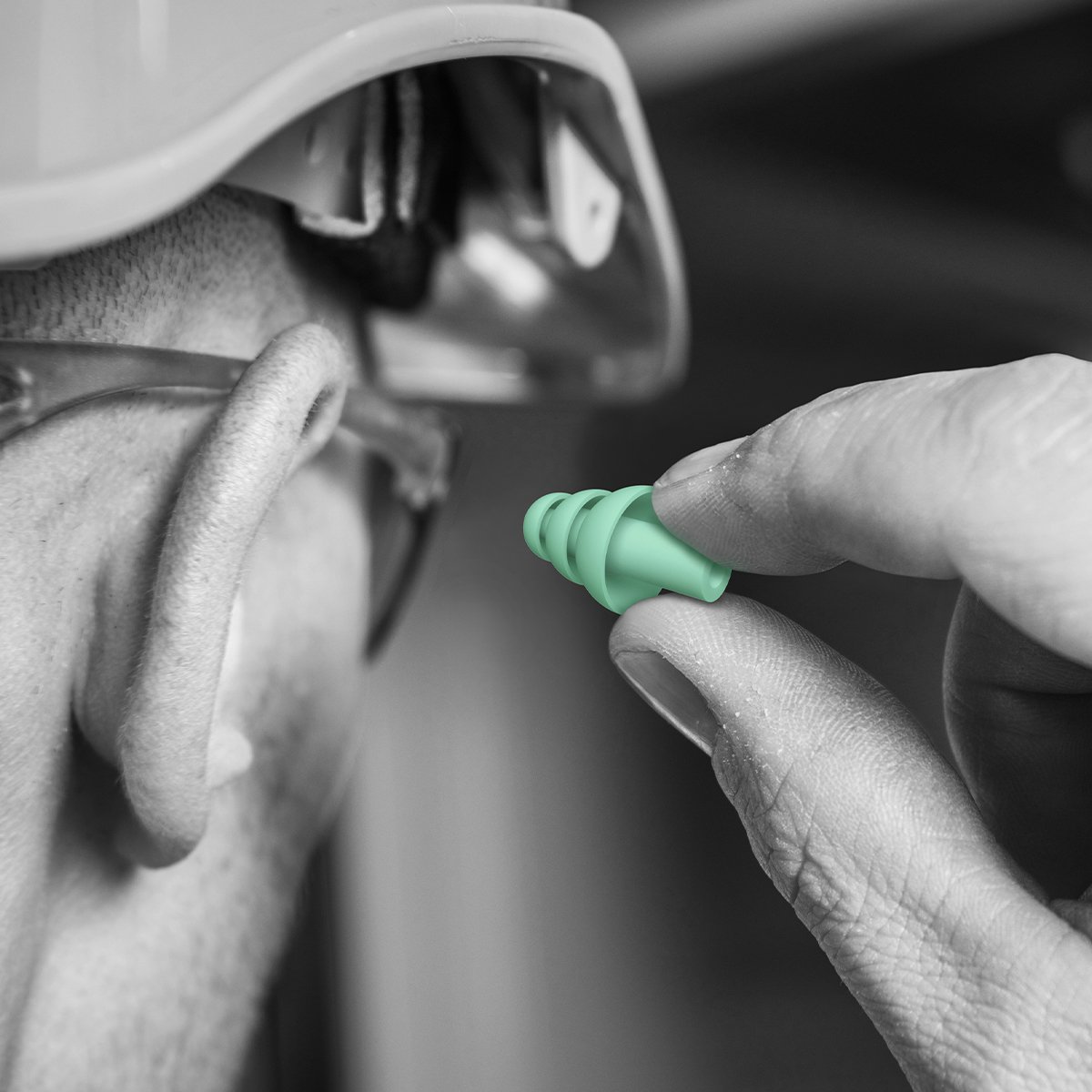
Most reusable earplugs last anywhere from a few months to over a year, depending on the material they are made from and how well you care for them. High-quality synthetic rubber earplugs, like those made for occupational use, can hold up for at least 365 days of regular use. Foam and silicone alternatives tend to wear out much faster. Below, we cover the most common questions workers and everyday users have about replacement timelines, cleaning habits, noise reduction performance, and long-term cost.
How long do reusable earplugs typically last?
Reusable earplugs typically last between three months and one year, though durable synthetic rubber models can last a full year or longer with proper care. The lifespan depends heavily on the material. Foam earplugs break down quickly with repeated use, silicone holds up longer but can degrade or stiffen over time, and denser synthetic rubber models are built to withstand daily wear without losing their shape or flexibility.
For workers who use earplugs every shift, material quality matters a lot. A pair that compresses and consistently recovers its shape will protect your hearing the same way on day 300 as it did on day one. Earplugs that start to feel stiff, sticky, or misshapen are telling you something important: they are no longer doing the job they were designed to do.
If you are buying bulk earplugs for employees, lifespan is a practical factor in your total cost. A pair that lasts 365 days reduces how often you need to reorder and cuts down on the waste that comes with frequent replacement cycles.
What are the signs that reusable earplugs need replacing?
Reusable earplugs need replacing when they no longer seal properly in the ear canal, show visible damage, or feel noticeably different from when they were new. The most reliable sign is fit: if earplugs that used to sit snugly now feel loose or slip out easily, the material has likely lost its elasticity and can no longer form the seal that blocks sound effectively.
Here are the most common signs it is time to replace your reusable earplugs:
- Loss of shape: The earplug does not return to its original form after compression or removal
- Stiffness or brittleness: The material feels harder than it used to, making insertion uncomfortable and the seal unreliable
- Sticky or tacky surface: Silicone and some rubber compounds can become tacky as they age, picking up more dirt and bacteria
- Visible cracks or tears: Any physical damage to the body or stem compromises both fit and protection
- Discoloration or persistent odor: These often signal bacterial buildup that cleaning alone cannot fully resolve
- Reduced noise reduction: If sounds feel louder than usual even with the earplugs in, the seal or filter may be compromised
Do not wait until earplugs are visibly falling apart. In occupational settings, degraded earplugs that look acceptable but no longer seal correctly are a real risk because the wearer may believe they are protected when they are not.
Does how often you clean earplugs affect how long they last?
Yes, cleaning frequency directly affects how long reusable earplugs last. Regular cleaning removes earwax, oils, and bacteria that break down the material over time and clog any acoustic filters. Earplugs that are cleaned consistently maintain their surface integrity, stay flexible longer, and continue to fit well. Earplugs that are rarely cleaned deteriorate faster and carry a higher risk of ear infections.
For most reusable earplugs, a simple routine works well. Wipe them down with a damp cloth after each use and allow them to dry completely before storing them. Avoid soaking earplugs with internal filters in water, as this can damage the filter and affect noise reduction performance. Store clean earplugs in a dry case rather than a pocket or loose in a bag, where they pick up debris and get compressed unevenly.
Overcleaning with harsh chemicals can be just as damaging as not cleaning at all. Alcohol-based wipes used too frequently can dry out rubber and silicone, causing them to crack sooner. Mild soap and water, used regularly, is usually the right approach.
Do reusable earplugs lose their noise reduction rating over time?
Reusable earplugs can lose effective noise reduction over time, even if their official rating has not changed. The SNR or NRR printed on packaging reflects the performance of a new, properly fitted earplug. As the material ages, stiffens, or loses elasticity, the earplug no longer forms the same seal in the ear canal, which means real-world attenuation drops below the rated level even though the number on the label stays the same.
This is why physical condition matters more than the number on the box. A degraded earplug worn in a loud manufacturing environment may offer far less protection than its SNR rating suggests. For workers exposed to heavy machinery or power tools, this gap between rated and actual performance can be genuinely harmful over time.
Filters in high-fidelity earplugs can also become clogged with earwax or debris, which affects how sound passes through them and can reduce their effectiveness. Keeping filters clean and replacing earplugs on schedule is the only reliable way to make sure the protection you think you have is the protection you are actually getting.
Are reusable earplugs more cost-effective than disposable ones?
Reusable earplugs are more cost-effective than disposable ones when calculated over time. A single pair of quality reusable earplugs used daily for a year costs significantly less per use than buying disposable foam earplugs in bulk and replacing them every shift. The cost advantage grows the longer the reusable pair holds up, and higher-quality materials extend that lifespan further.
For employers sourcing bulk earplugs for employees, the math is straightforward. Disposable earplugs require constant reordering, generate more waste, and still need to be replaced if a worker loses or damages a pair. Reusable earplugs reduce reorder frequency, lower per-employee cost over time, and produce less plastic waste, which matters for companies with sustainability commitments.
There is also a compliance and performance argument. Workers who find their earplugs uncomfortable tend to wear them inconsistently, which creates real liability in regulated environments. Earplugs that fit well and feel comfortable are worn as intended, which means better protection and fewer compliance issues over time.
If you are looking for a reusable option built for daily occupational use, our Shush Worker earplugs are designed for exactly that. With an SNR of 23 dB, hypoallergenic synthetic rubber construction, and a minimum lifespan of 365 days, they are built to deliver consistent protection shift after shift without the ongoing cost of disposables.
Frequently Asked Questions
How should I store reusable earplugs to maximize their lifespan?
Store your reusable earplugs in a hard-sided, ventilated case away from direct sunlight, heat, and humidity. Avoid tossing them loose into a bag, toolbox, or pocket, where they can be compressed unevenly, pick up debris, or get exposed to chemicals that degrade the material. A dedicated case keeps them clean between uses and helps them hold their shape longer, which directly supports a consistent seal every time you wear them.
Can I use the same pair of reusable earplugs for both work and recreational activities like concerts or shooting ranges?
Yes, but it is worth checking that the earplug's noise reduction rating is appropriate for each environment before doing so. A pair rated for industrial use with a high SNR may over-attenuate sound at a concert, while a high-fidelity earplug designed for music may not provide enough protection around heavy machinery. If you use earplugs across very different noise environments, consider keeping a dedicated pair for your highest-risk setting to avoid unnecessary wear on your primary hearing protection.
What is the best way to check whether my reusable earplugs are still forming a proper seal?
A simple self-check is to insert your earplugs as you normally would, then cup your hands over your ears. If the level of sound isolation changes noticeably when you add your hands, the earplugs are likely not sealing as well as they should. You can also compare how sounds feel today versus when the earplugs were new — if ambient noise seems louder or less muffled than it used to, that is a strong signal the seal has deteriorated and replacement is overdue.
Are reusable earplugs safe for people with sensitive skin or latex sensitivities?
Many reusable earplugs are made from hypoallergenic materials, such as synthetic rubber or medical-grade silicone, that are specifically designed to be safe for sensitive skin and latex-free. If you have a known latex allergy, always check the product specifications before purchasing and look for earplugs explicitly labeled as latex-free and hypoallergenic. Avoid foam earplugs that do not clearly disclose their materials, as some older or lower-cost formulations may contain irritants.
How do I know when it is time to replace reusable earplugs if they still look fine on the outside?
Appearance alone is not a reliable indicator of earplug performance, which is why setting a replacement schedule matters just as much as visual inspection. Even if a pair looks clean and undamaged, material degradation happens at a molecular level and will affect the fit and seal long before visible cracks or discoloration appear. A good rule of thumb is to replace daily-use earplugs at least once a year, or immediately if you notice any change in fit, flexibility, or how well they block sound — whichever comes first.
What common mistakes do people make that shorten the lifespan of reusable earplugs?
The most common mistakes are cleaning earplugs with alcohol or harsh disinfectants, storing them while still damp, and leaving them loose in a pocket or bag where they get dirty and deformed. Pulling earplugs out by the cord or stem too aggressively can also cause micro-tears in the material that worsen over time. Sticking to mild soap and water for cleaning, drying completely before storage, and using a protective case are the three habits that make the biggest difference in how long a pair holds up.
If I manage hearing protection for a team of workers, how should I track when individual pairs need replacing?
The most practical approach is to set a fixed replacement schedule — for example, issuing new earplugs every 12 months per employee — and to pair that with brief monthly visual checks during safety inspections. Keeping a simple log of issue dates per employee removes the guesswork and ensures no one is unknowingly using degraded protection. Some safety managers also include earplug condition as part of their standard PPE audit checklist, which makes it easier to catch early signs of wear before they become a compliance or liability issue.
Related Articles
- Are there earplugs that fit small and large ears?
- Can you buy earplugs in bulk for employees?
- Can better earplugs improve hearing protection compliance?
- Can ringing ears after a festival become permanent?
- How do filters in high-fidelity earplugs preserve sound quality?
- Do earplugs for football games affect how you hear the referee's whistle?
- Can you still talk to friends at a club whilst wearing earplugs?
- Why do some concertgoers say earplugs make music sound better?
- How do you clean and maintain reusable earplugs after a night out?
- What is noise-induced hearing loss and can earplugs prevent it?
- How do sound engineers and event crew protect their hearing at stadium shows?
- Do earplugs change how electronic music sounds at a live EDM event?
- What is the safest way to protect your hearing at outdoor stadium concerts?
- Do earplugs for clubbing muffle the music too much?
- What decibel level is dangerous at a music festival?